
Bespoke Timber Windows in Cornwall: What Homeowners Need to Know

Updated: Jul 4
Most homeowners start this journey with the same brief: keep the character, fix the drafts, improve comfort. What they often underestimate is how much of a timber window’s success depends on the building it’s going into, not just the window itself.
Cornwall properties are rarely straightforward. Stone walls shift slightly over time, previous replacements are often done to inconsistent openings, and coastal exposure adds another layer of stress. At Wood.ED Joinery, we spend as much time measuring and correcting openings as we do actually manufacturing the windows.
If you’re searching for bespoke timber windows in Cornwall, the real question isn’t “what style do I want?” but “what will actually work in my house without fighting it every season?”
No two openings are ever truly the same
Even in modern homes, window openings drift out of square during construction. In older Cornish cottages and Victorian terraces, that movement is far more pronounced.
We regularly find:
Width differences of 10–25mm across a single elevation
Sills that have dropped or been rebuilt at slightly different heights
Reveals that taper due to long-term settlement
Previous PVC installations packed out with expanding foam to hide irregularities
That matters because timber windows don’t rely on force to fit. They rely on accuracy and controlled tolerance. If we build a rigid “perfect” frame, it will fail the moment it meets a real wall.
This is why every project we take on starts with on-site templating, not just measurements.

Material choice is not aesthetic—it’s structural
Homeowners often choose timber for appearance, but the material choice affects movement, durability, and maintenance cycles more than most expect.
In Cornwall, we mainly work with:
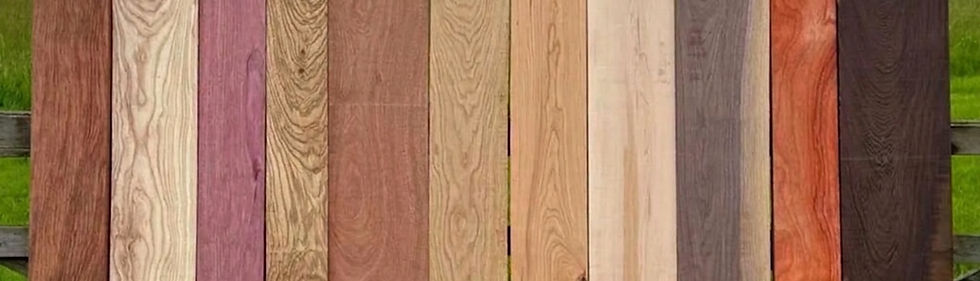
Accoya: highly stable, minimal swelling, ideal for exposed coastal sites
Hardwoods (often Oak, Iroko and Sepele): strong and traditional in appearance, but more reactive to moisture changes
Accoya behaves almost predictably in coastal environments. Hardwood behaves beautifully, but demands more careful design around end grain, coatings, and joint exposure.
We don’t recommend one universally. We match material to exposure level, orientation, and maintenance expectations. A south-facing coastal façade behaves very differently from a sheltered courtyard elevation just a few miles inland.
Real project: replacing failing windows in a coastal terrace near Falmouth
A recent job involved a mid-19th-century terrace overlooking the Carrick Roads. The existing windows were a mix of original box sash frames and 1990s softwood replacements that had started to fail in different ways.
The main issue wasn’t just rot. It was distortion.
One first-floor window had twisted nearly 14mm across the diagonal. Another opening had been rebuilt during a previous renovation using a steel lintel that had slightly dropped on one side, creating a permanent skew in the reveal.
We couldn’t standardise anything.
We built bespoke sash units using Accoya for the outer boxes and laminated hardwood for the sashes. Slimline double glazing was specified at 14mm overall thickness to maintain traditional sightlines without adding excessive weight to the cord system.
The biggest challenge came during installation. The original masonry was lime-based and extremely soft in places, especially around the left-hand reveals. Mechanical fixing alone would have cracked the substrate, so we used a hybrid approach: stainless steel fixings combined with lime-compatible bedding compounds that allowed slight movement.
We also had to recalibrate the sash weights on-site. The glass change increased each sash by just over 1.2kg compared to the failed units, which meant the original counterbalance system would have caused sticking. We adjusted weight pockets and fine-tuned the pulleys to restore smooth travel.
Nothing about that installation was “standard.” It was about making the system behave correctly inside a structure that had stopped behaving consistently decades ago.
Performance depends more on installation than material
A well-made timber window can underperform if installed incorrectly. That’s not theory—it’s what we see most often when replacing recent installations.
The critical points are:
Frame alignment within the opening (not just level, but plumb across depth)
Seal compression consistency around the entire perimeter
Thermal bridge control at sill and reveal junctions
Allowing for seasonal expansion without stressing joints
In Cornwall, wind-driven rain exposes even small installation flaws quickly. A 2–3mm gap that might go unnoticed inland becomes a persistent cold bridge on a coastal property.
We don’t treat installation as the final step. It’s part of the design.
Timber movement: the part most people don’t see
Timber is not static. It reacts to moisture content in the air and the way a building breathes.
Across a typical year in Cornwall, external timber can shift noticeably between winter and summer. If joints are over-restricted, that movement has to go somewhere—and it usually shows up as:
Paint cracking along corners
Sticking sashes
Failed seals
Hairline joint openings
This is why mortise and tenon joinery still dominates structural window construction. It allows controlled movement across the joint rather than forcing rigidity. The joint is designed to work with the material, not against it.
We also avoid over-tight tolerances in exposed external sections. A window that looks “tight” on day one can become a maintenance problem within a few seasons.

Maintenance reality, not theory
Timber windows don’t fail suddenly. They degrade gradually in predictable ways, usually starting with coatings rather than structural timber.
In coastal Cornwall, expect:
External paint inspection every 3–5 years
Local touch-ups around high-exposure edges sooner if needed
Re-sealing of glazing beads if micro-gaps appear
Occasional ironmongery adjustment as buildings settle
Most long-term failures we repair come from ignored paint breakdown on end grain or sill edges. Once moisture enters at those points, it spreads behind coatings rather than through visible surfaces.
Maintenance is not intensive, but it is non-negotiable.
Are timber windows still energy efficient?
Yes, but only when treated as a system.
The timber itself has low thermal conductivity, but performance depends on:
Glass specification (often low-E slimline double glazing in heritage work)
Seal quality and compression
Frame detailing around junctions
Installation accuracy
A poorly fitted modern window loses more heat than a well-installed timber frame with slightly older glazing technology. Air leakage is usually the real issue, not the material.
In Cornwall’s coastal wind conditions, airtightness is often more important than U-value on paper.
FAQ
Do timber windows work in coastal Cornwall homes without constant maintenance?They work well if designed correctly, but “no maintenance” is unrealistic. The key is reducing exposure stress through material choice and detailing, not eliminating upkeep.
Can you match existing period windows exactly?
Yes, but only after detailed survey work. Many older windows have evolved through repairs, so we often end up reconstructing the original intention rather than copying the current state.
What’s the biggest mistake homeowners make when replacing timber windows?Choosing based on appearance alone. If the installation ignores the building’s movement and geometry, the window will fail early regardless of material quality.
Is Accoya always better than hardwood?No. It performs better in exposed environments, but hardwood still has advantages in strength and traditional detailing. The wrong choice depends more on exposure and maintenance expectations than price.
Homeowners
Most timber window problems don’t start with the product. They start with assumptions about the building. Once you understand how the structure behaves, the design decisions become far more constrained—but also far more reliable.


Comments